
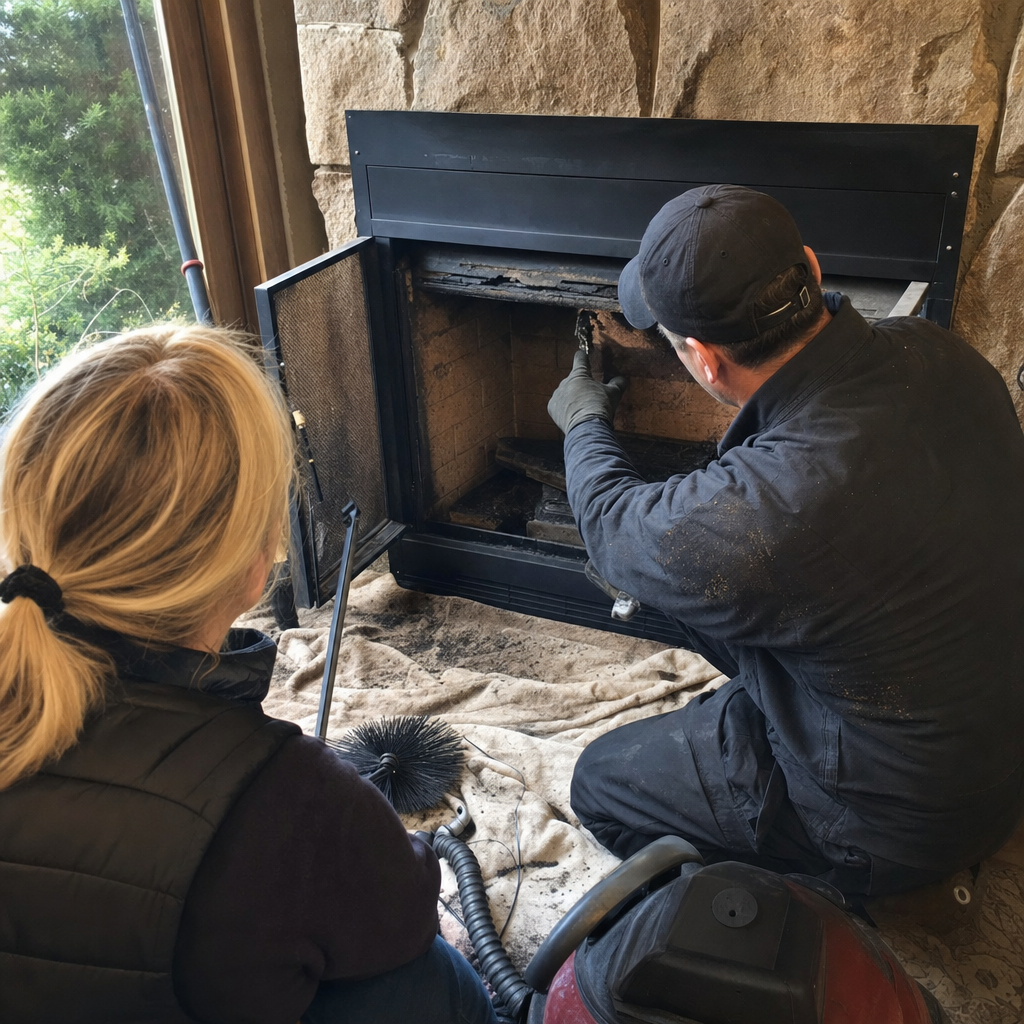
How Often Should You Clean Your Chimney in Washington, WA? It Depends on What You Burn, How Much, and How Hot
Most chimneys in Washington need professional cleaning once per year. If you burn more than two cords of wood per season, rely on a wood stove as primary heat, or burn softer or damp wood, you’ll likely need sweeping every 60–80 fires or twice per season. Gas fireplaces need annual inspection but typically only cleaning every two to three years unless sooting appears. For a schedule calibrated to your actual burn habits, call Horizon Chimney Sweep Washington at (866) 541-8697 — we’ll inspect your flue and tell you exactly where you stand.
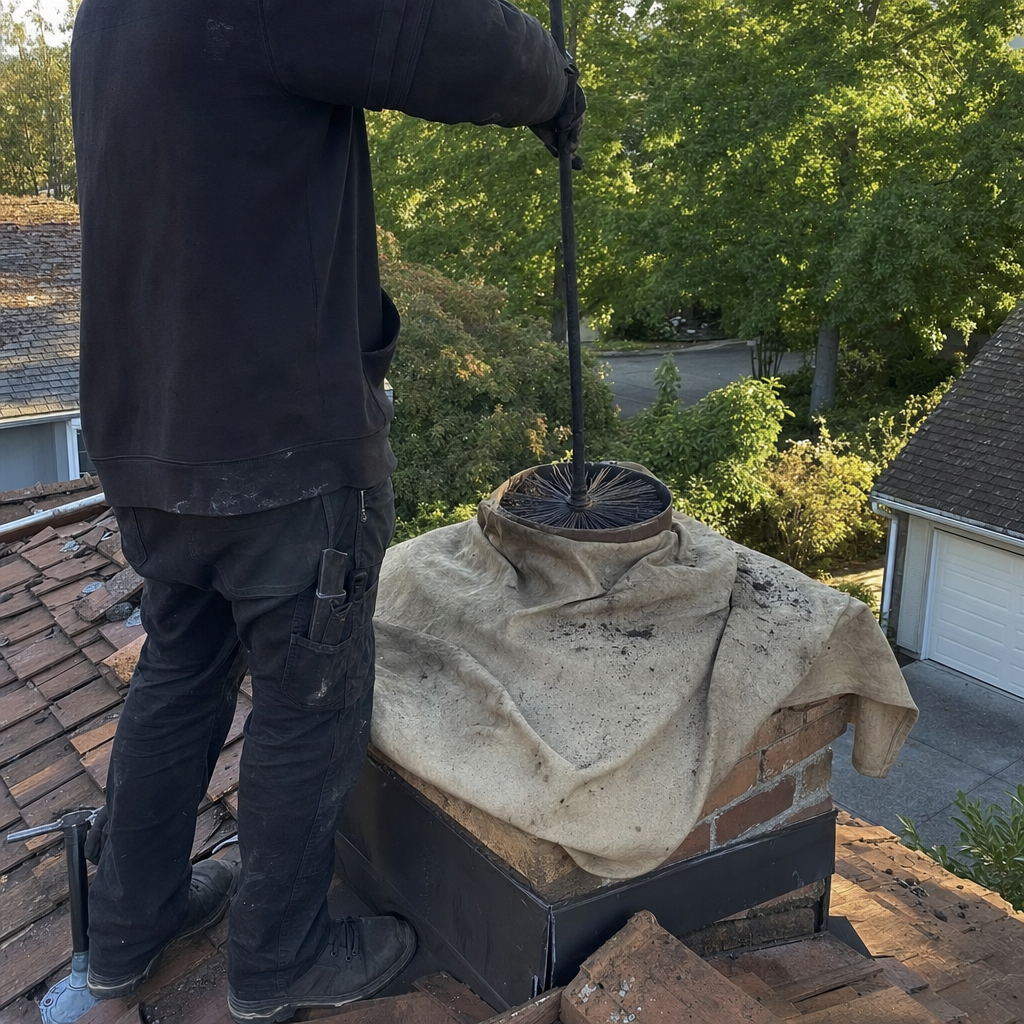
James Wilson, our owner and lead technician, has spent 17 years inside Washington chimneys from Tenleytown to Barnaby Woods to Chevy Chase. The National Fire Protection Association’s “annual” recommendation is the right floor for safety, but it’s not the full formula. What we’ve learned from over 1,006 verified reviews and thousands of local jobs is that two homeowners on the same block can need radically different cleaning intervals based on nothing more than their wood source and burn pattern.
Why “Once a Year” Is Only Half the Answer for Washington Homes
The Pacific Northwest climate creates a specific chimney challenge that national guidance rarely addresses. In Washington, we see a lot of shoulder-season burning — fires lit at 45°F on damp October evenings or drizzly April nights when you’re chasing away the chill, not heating the house. These cooler, shorter burns produce cooler flue temperatures than sustained January fires, which means more unburned particulate condenses on your liner walls rather than exiting the cap.
We’ve pulled heavy creosote deposits from chimneys whose owners swore they “only burn occasionally.” The pattern matters more than the calendar. A homeowner running two hot fires daily through January with properly seasoned oak may actually accumulate less creosote than someone lighting a decorative fire every third evening in March when the flue never fully warms.
Here’s what 17 years of Washington flue inspections has taught us about real-world frequency:
- Gas fireplaces, inserts, or log sets: Annual inspection is non-negotiable — debris, animal nests, or venting issues don’t care about fuel type. Actual cleaning every 2–3 years unless sooting or odor indicates otherwise. We’ve found failed HeatShield refractory panels in gas units that would have gone undetected without inspection.
- Occasional wood burning under 1 cord/season: Annual sweeping. Even light use in our humid climate lets moisture and acidic condensation attack clay flue tiles.
- Regular wood burning at 2–3 cords/season: Minimum annual, with mid-season assessment if you’re burning softwoods or mixed local cordwood. This is the most common Washington profile we see.
- Wood stove as primary or significant heat source: Every 60–80 fires, typically twice per burning season. These systems run hotter and harder, and the stakes for liner integrity are higher.
- Pellet stoves: Annual professional service plus monthly ash pan and vent cleaning per manufacturer spec. The compressed fuel burns cleaner but the exhaust paths are narrow and unforgiving.
The honest answer is that James Wilson can tell you your specific interval after he sees your flue on the first visit. After that, your burn log and fuel source tell us more than the calendar does.
The Washington Wood Problem: Why Your Fuel Source Changes Everything
Washington sits at a crossroads of firewood culture. Some homeowners split and stack their own oak, maple, or hickory for 18 months under cover. Others buy “seasoned” cordwood from local suppliers — wood that’s been split but often not dried the full 12+ months hardwood needs to drop below 20% moisture content.
That half-seasoned wood is the silent factor compressing your safe cleaning interval. Wet or partially seasoned wood:
- Burns at lower temperatures, sending more unburned hydrocarbons up the flue
- Produces significantly more creosote per fire than properly dried hardwood
- Creates the glazed, tar-like third-degree creosote that’s hardest to remove and most prone to ignition
We’ve opened flues in Foxhall Village and Kent where the homeowner burned two cords of “seasoned” mixed hardwood and accumulated more creosote than a neighbor burning three cords of kiln-dried oak. The difference was entirely in the wood. If you’re buying local cordwood and don’t know the split date, assume it needs more frequent attention.
James grew up in Tenleytown and learned this lesson early — his first mentor made him split a cord and weigh it monthly until he understood what “seasoned” actually meant by mass, not by claim. That hands-on foundation is why we still moisture-test wood samples when a cleaning reveals unexpectedly heavy buildup.
What Creosote Buildup Actually Looks Like — And What It Means for Your Schedule
Not all creosote is equal, and the type we find determines both how we clean and how soon you need us back. The Chimney Safety Institute of America recognizes three stages, and we see all three across Washington’s varied housing stock:
| Creosote Stage | Appearance | What It Means for Cleaning Frequency |
|---|---|---|
| First-degree | Fluffy, soot-like, brushes off easily | Normal accumulation; standard annual cycle |
| Second-degree | Crunchy, tar-like flakes | Burning cooler or wetter fuel; consider shorter interval |
| Third-degree | Shiny, hardened, glaze-like coating | Immediate professional removal needed; likely compressed schedule going forward |
Third-degree creosote requires rotary whipping with chains or specialized chemical treatment — not standard brushing. We’ve deployed DuraFlex stainless liners in Washington homes where the original clay tile was too compromised by years of glazed buildup to safely continue service. Catching this early through proper frequency is what separates maintenance from rebuild.
How Horizon Documents What Your Chimney Actually Needs
At 1,006 jobs reviewed, we’re not working from national statistics — we’re working from Washington-specific patterns. Every Horizon cleaning includes:
- Video or photographic flue documentation so you see what we see
- Moisture and creosote stage notation for your file
- A recommended return interval based on your actual burn profile, not a generic calendar
- Condition assessment of your liner, crown, and cap — because cleaning frequency and repair needs are connected
Our Chimney Cleaning & Sweep service builds this documentation into every visit. Over time, we can predict your accumulation curve and catch the shift from first-degree to second-degree before it becomes a hazard.
We install and repair with trusted industry brands — DuraFlex for stainless liner replacements, HeatShield for refractory restoration, Gelco for cap and screening solutions, and Olympia Chimney components where manufacturer spec demands. These aren’t off-brand patches; they’re the materials that last through Washington’s wet winters and freeze-thaw cycles.
Warning Signs That Your “Annual” Interval Is Too Long
Even if you’re technically within a yearly cycle, certain symptoms mean your chimney needs attention now — regardless of when it was last swept:
- Smoke backing up into the room on startup, especially in damp weather. This often indicates partial flue blockage or reversed draft from creosote narrowing.
- A strong, acrid odor during humid days. That’s creosote off-gassing; it’s actively deteriorating your liner.
- Black, oily residue collecting around the firebox or damper. Sign of incomplete combustion and heavy accumulation.
- Visible tar-like drips in the firebox or at the cleanout door. Third-degree creosote is migrating downward.
- Sparks or embers exiting the cap more than usual. The flue is constricted, accelerating exhaust velocity.
We’ve responded to emergency calls in Palisades and Spring Valley where the homeowner noticed one of these signs and delayed because “it was only six months since cleaning.” The interval that matters is the one that keeps your system safe, not the one on your calendar.
FAQs
Professional chimney cleaning in Washington typically ranges from $180 to $340 for a standard wood-burning fireplace sweep and inspection. Gas fireplace inspections run slightly lower, while heavy third-degree creosote removal or rotary cleaning can reach $400–$600 depending on accessibility and buildup severity. For an exact quote on your specific system, call Horizon Chimney Sweep Washington at (866) 541-8697 — estimates are free and we’ll inspect before pricing.
No — delaying cleaning increases risk and often raises total cost. Third-degree creosote removal requires specialized equipment and chemical treatment, running 50–100% more than routine sweeping. Uncaught liner damage from acidic condensation or creosote corrosion can lead to DuraFlex liner replacement at $2,000–$4,000 versus $200–$300 annual maintenance. We’ve rebuilt fireboxes and replaced crowns in Washington homes where deferred cleaning allowed water and acid to destroy masonry that annual service would have protected.
We can give you a probable range based on your fuel type, burn volume, and appliance — but the precise interval requires seeing your flue. Creosote accumulation depends on variables we can’t assess remotely: your actual wood moisture, draft performance, liner condition, and burn habits. After James Wilson inspects your system on the first visit, we’ll establish a documented schedule specific to your chimney. Call (866) 541-8697 to schedule that baseline inspection.
No — gas fireplaces need annual inspection and periodic cleaning. While gas burns cleaner than wood, modern high-efficiency gas inserts can produce acidic condensation that deteriorates liners. Animal nests, debris, and failed components block vents regardless of fuel type. We inspect gas systems for sooting, which indicates incomplete combustion and requires cleaning, plus venting integrity that protects against carbon monoxide. The cleaning interval is longer — typically every 2–3 years — but “never” is not accurate.
What Washington Homeowners Should Actually Do
A clean chimney isn’t a luxury — it’s just the part of your house that’s been quietly doing its job and deserves the same attention as everything else. The NFPA’s annual recommendation keeps you safe; calibrating that recommendation to your actual burn pattern keeps you efficient, prevents unexpected costs, and extends the life of your liner and masonry.
If you’re unsure where you fall on the frequency matrix — whether your shoulder-season habits, your wood source, or your older appliance changes the math — the simplest step is a professional assessment. James Wilson or a Horizon technician will inspect your flue, document what we find, and give you a schedule based on evidence rather than assumption.
If you’d rather have it looked at, Horizon Chimney Sweep Washington offers a no-pressure assessment in Washington — call (866) 541-8697 for a free estimate.
Written by James Wilson, Owner & Lead Technician at Horizon Chimney Sweep Washington, serving Washington, WA.