
Signs Your Chimney Needs Cleaning in Washington, WA — What We Look for Before Problems Turn Hazardous
The clearest signs your chimney needs cleaning include smoke that hesitates before drafting upward, a damper handle that feels tacky or stiff from condensed creosote vapors, and fires that suddenly need more kindling to catch — all early warnings that creosote buildup is restricting your flue before visible soot or odors appear. If you’re noticing any of these in your Washington home, a professional sweep and camera inspection will confirm whether you’re dealing with routine Stage 1 creosote or the harder, more dangerous Stage 2 and 3 deposits that require immediate attention. Call Horizon Chimney Sweep Washington at (866) 541-8697 for a free estimate — we’ll tell you exactly what we find and what it actually means.
Why Washington’s Climate Makes Early Chimney Detection Especially Important
Washington’s humid subtropical summers and freeze-thaw winters create a chimney environment that’s harder on masonry and flue systems than drier climates. We’ve spent 17 years working on chimneys from Capitol Hill rowhouses to the larger brick fireplaces in Chevy Chase and the wood-burning setups common in Takoma Park — and the pattern is consistent. Moisture is the accelerant that turns minor creosote accumulation into a serious problem.
Here’s what happens specifically in our area: summer humidity condenses inside cool flue tiles, especially when creosote buildup already narrows the passage. That moisture mixes with acidic combustion byproducts and begins degrading the liner surface. Come winter, the freeze-thaw cycle in Washington’s variable January temperatures expands any existing cracks. By the time you smell smoke or see visible staining, you’ve often got both a cleaning problem and a moisture infiltration problem.
James Wilson, our owner and lead technician, grew up in Tenleytown and learned this regional pattern apprenticing under a sweep who’d seen fifteen winters of neglect firsthand. When we get a call from a Washington homeowner, we’re not just looking for generic “dirty chimney” symptoms — we’re diagnosing how our specific climate has interacted with their specific burning habits.
The Early Signs Most Homeowners Miss (And What They Actually Mean)
By the time your chimney smells like a campfire in July or your fires are noticeably harder to start, the cleaning is overdue — not timely. The early signs don’t announce themselves from the living room. Here’s what we look for before it gets that far, based on thousands of Washington inspections over 17 years.
Smoke That “Hesitates” Before Rising
Healthy draft pulls smoke upward immediately. When smoke lingers in the firebox for a second or two before committing to the flue, that’s partial restriction — creosote narrowing the passage enough to disrupt airflow but not enough to cause visible backup into the room. Homeowners often describe this as “the fire just seems slower” or “it takes longer to get going.” What they’re actually observing is reduced draw from a flue that’s lost significant diameter to buildup.
In Washington’s older housing stock — the pre-war brick homes in Mount Pleasant, the 1920s colonials in Cleveland Park — original flue tiles were often undersized by modern standards to begin with. Even moderate creosote accumulation pushes these systems past functional limits faster than in newer construction with larger, stainless steel liners.
A Damper That Feels Tacky or Stiff
Condensed creosote vapor deposits a thin, tar-like film on metal surfaces — most noticeably the damper plate and handle mechanism. If your damper doesn’t swing as freely as it used to, or if the handle feels slightly sticky even when cool, that’s not rust or age. That’s Stage 1 creosote condensing on moving parts, and it’s one of the earliest reliable indicators that the flue above has significant accumulation.
We’ve pulled dampers in Washington homes that were effectively glued in place by hardened creosote. The homeowner’s “minor stiffness” was actually a warning that Stage 2 glazed creosote had formed above — the hard, shiny, highly combustible layer that standard brushes won’t remove without specialized chains or rotary equipment.
Black Dusting Around the Firebox Opening After Fires
Fine black particles on the hearth or mantel after a fire indicate downdraft — air pushing back down the flue instead of drawing cleanly upward. This happens when the flue’s restricted diameter can’t maintain consistent negative pressure, especially in windy conditions or when outdoor and indoor temperatures are close. The “dusting” is partially burned particulate matter that escaped the firebox during these pressure fluctuations.
Washington homeowners often mistake this for “soot falling down” or assume their fireplace screen is inadequate. In our experience, it’s almost always an airflow problem originating in the flue, not a containment problem at the opening.
Fires That Need More Kindling Than They Used To
If you’re adding newspaper or fatwood to fires that used to start easily with standard kindling, your flue may be delivering less oxygen to the firebox. Reduced draft means slower combustion, which means you compensate with more accelerant — and ironically, more accelerant produces more creosote, accelerating the problem.
We ask every Washington homeowner the same three questions before we go up: how long since the last cleaning, what kind of wood they’re burning, and whether their fires have felt different lately. The answers almost always match what we find in the flue.
When “Classic” Signs Mean You’re Already Past Due
Most online lists lead with visible soot buildup, strong campfire odors in warm weather, and visible creosote crust on the damper. These are real signs — but they indicate cleaning is past due, not approaching. By this stage, Stage 2 creosote may already be present, and the simple brush-and-vacuum cleaning you needed six months ago has become a more involved job.
Here’s how we distinguish the stages when we’re inside a Washington chimney:
- Stage 1 (sooty, flaky): Brushes off easily with standard poly or wire brushes. What you want to catch.
- Stage 2 (shiny, glazed, tar-like): Requires rotary chains or specialized whips. Still removable, but takes 2-3x longer and needs camera verification that it’s fully cleared.
- Stage 3 (hardened, crusted, often puffy): May require chemical treatment or, in severe cases, liner replacement with a DuraFlex or Olympia Chimney stainless steel system. This is the stage that creates chimney fire risk.
Washington’s humidity accelerates the progression from Stage 1 to Stage 2. A flue that might take three burning seasons to glaze in Arizona can reach that point in two here — especially if the homeowner burns unseasoned wood, which is common given our area’s abundant oak and maple supply that homeowners cut and burn before it’s fully dried.
The Washington-Specific Moisture Signal: White Staining on Exterior Masonry
After particularly rainy seasons — and Washington has had its share — we get calls about “staining problems” on exterior chimney brick. Homeowners describe white or grayish powder or streaking on the masonry, sometimes with minor spalling (flaking) of the brick face. They want to know if they need tuckpointing or waterproofing.
Often, yes — but the underlying cause is frequently creosote buildup restricting the flue and trapping condensation. Here’s the mechanism: when combustion gases can’t exit efficiently through a narrowed flue, they cool more slowly inside the chimney structure. That extended contact time allows moisture and acids to migrate through deteriorating mortar joints into the surrounding masonry. The white staining, called efflorescence, is mineral salts left behind as that moisture evaporates through the brick face.
We’ve inspected chimneys in Washington’s Shepherd Park and Brightwood neighborhoods where homeowners had received quotes for extensive exterior masonry repair — when the actual problem was a flue so restricted that gases were pressurizing the chimney cavity. Clean the flue, seal the liner system with appropriate materials, and the moisture migration stops. The exterior work becomes preventive maintenance instead of emergency reconstruction.
This is why our default approach combines Chimney Cleaning & Sweep with camera inspection. The camera shows us whether that exterior staining is a symptom of flue restriction or an independent masonry issue — and we can tell you before any work starts which problem you’re actually paying to solve.
Cleaning Need vs. Cleaning-Plus-Inspection Need: How We Decide
Not every sign points to the same service level. Here’s how we categorize what homeowners report:
| What You Notice | What It Usually Indicates | Our Recommended Response |
|---|---|---|
| Smoke hesitation, tacky damper, increased kindling needs | Stage 1 creosote, early restriction | Standard sweep with visual inspection |
| Visible soot in firebox, summer odors, black dusting on hearth | Stage 1-2 creosote, established restriction | Sweep with camera inspection to confirm stage and liner condition |
| White exterior staining, visible creosote crust, smoke backup into room | Stage 2-3 creosote, possible liner damage or moisture infiltration | Sweep, camera inspection, and evaluation for liner repair or HeatShield resurfacing |
| Chimney fire history (popping, dense smoke, hot exterior masonry) | Stage 3 creosote, possible structural damage | Full camera inspection, possibly Gelco or Famco liner replacement if damage confirmed |
We’ve built our reputation on not upselling what isn’t needed — our 1,006 verified reviews at 4.8 stars reflect that. But we also won’t perform a standard sweep and leave a damaged liner unaddressed. The camera inspection lets us show you exactly what we’re seeing, in real time, on a screen you can watch with us.
What Washington Homeowners Should Check Between Professional Visits
We’re not going to suggest you climb on your roof or disassemble your damper assembly. But there are safe, ground-level observations that help you time your professional cleaning appropriately:
- After your last fire of the season, note how completely the firebox clears of smoke when you open the damper fully. Any lingering haze suggests draft weakness.
- In summer, stand near the fireplace on a humid day. A faint ashy or campfire smell indicates creosote deposits are off-gassing — they’re substantial enough to be active even without combustion.
- Check the damper operation monthly when the fireplace is cold. It should move freely through its full range. Any new resistance or roughness is worth noting.
- Look up the flue from the firebox with a flashlight (fireplace cold, damper open). You should see relatively clean flue tile or liner surface. Significant black buildup visible from below means the upper flue — where you can’t see — is worse.
These checks take five minutes and cost nothing. They also give you concrete information when you call, which helps us estimate whether you’re looking at routine maintenance or something more involved.
How Often Should Washington Chimneys Actually Be Cleaned?
The NFPA 211 standard says chimneys, fireplaces, and vents shall be inspected at least annually and cleaned as needed. “As needed” is the critical variable.
For Washington specifically, we recommend:
- Annual inspection for every wood-burning system, regardless of use frequency — our humidity makes even occasional use more deposit-prone than in drier climates.
- Annual cleaning if you burn more than one cord of wood per season, burn anything other than well-seasoned hardwood, or notice any of the early signs above.
- Cleaning every 2-3 years only for very light use (fewer than 20 fires per season) with properly seasoned wood and no observed symptoms — but still with annual inspection to confirm.
Gas fireplaces need less frequent cleaning but still annual inspection — their byproducts are cleaner but not inert, and moisture issues from adjacent systems can affect them too.
What Horizon’s Sweep and Inspection Process Actually Involves
When James Wilson or one of our chimney-exclusive technicians arrives at your Washington home, here’s what happens:
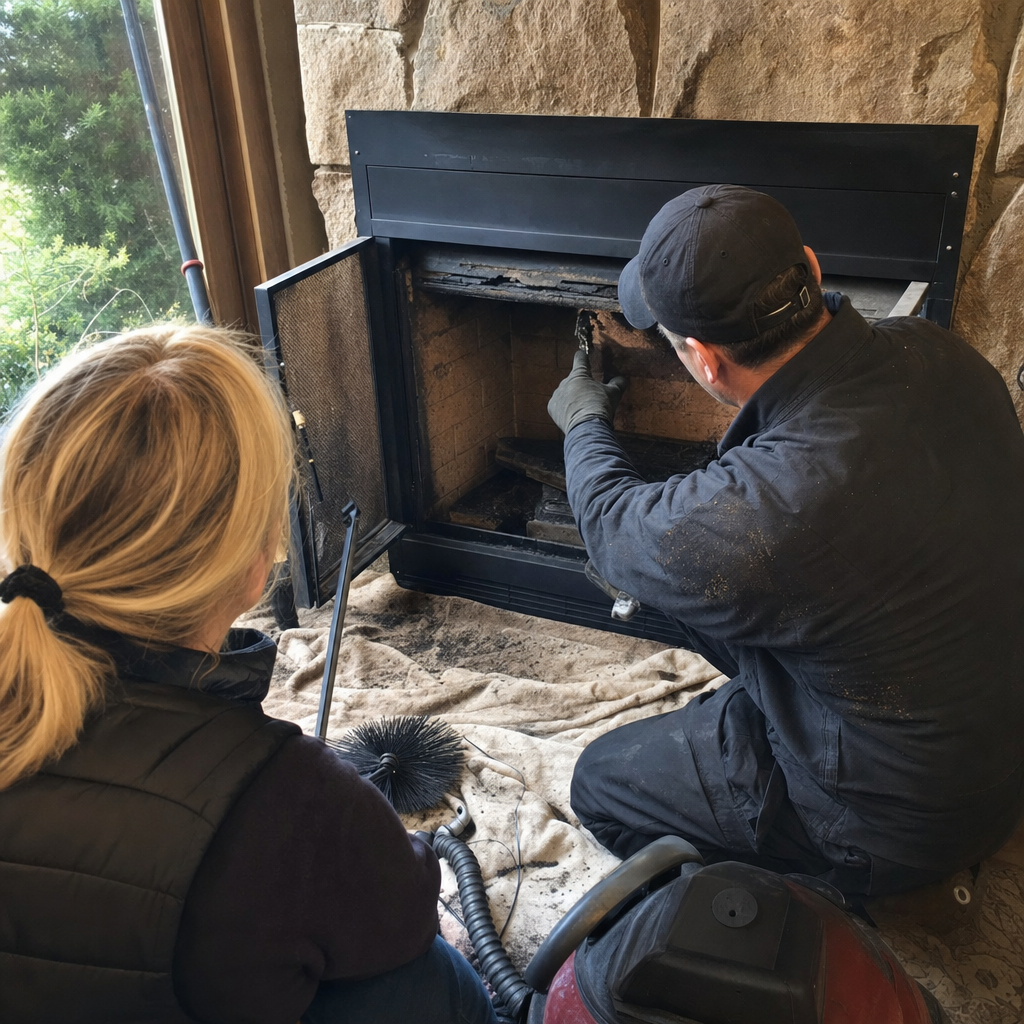
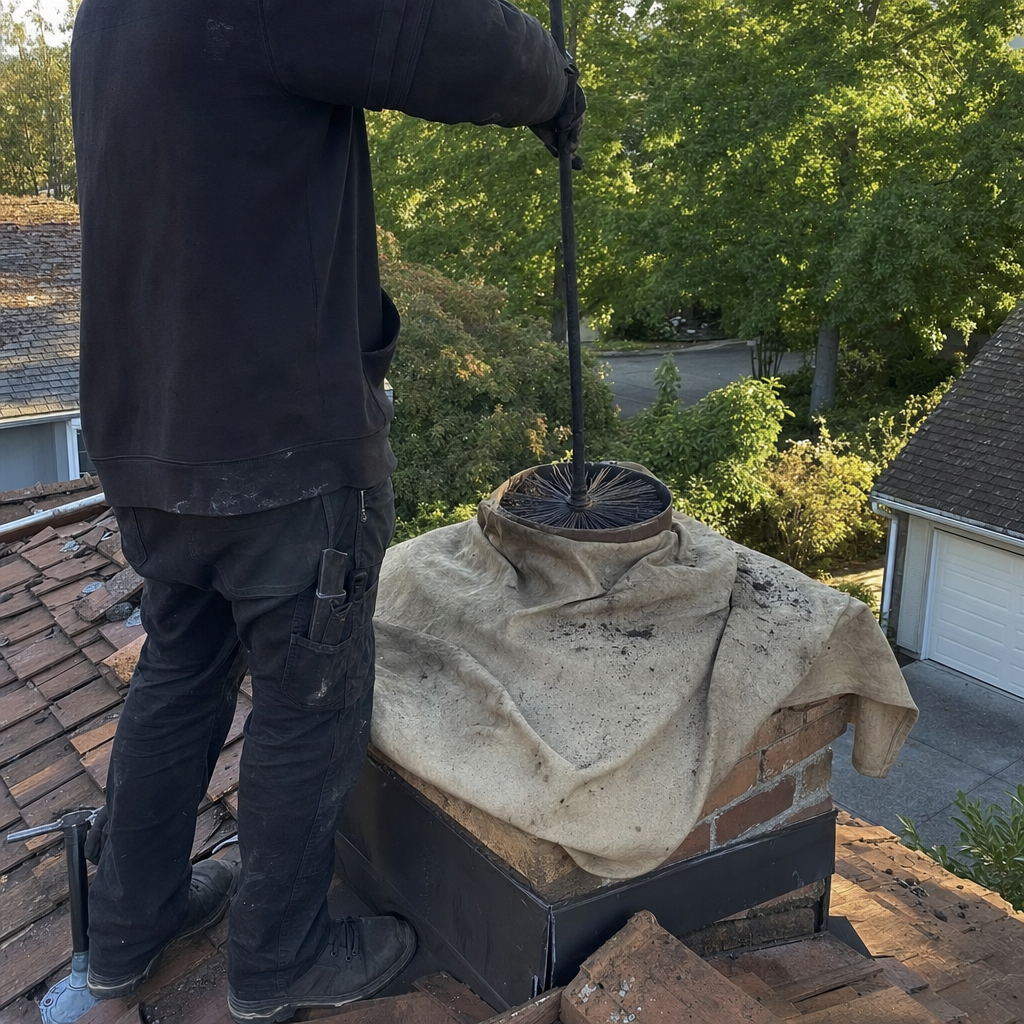
We start with those three questions — last cleaning, wood type, fire behavior changes. Then we tarp the work area, run a high-powered HEPA vacuum to contain dust, and begin the sweep with brushes sized to your specific flue diameter. For standard cleanings, this removes Stage 1 and most Stage 2 creosote.
The camera inspection follows, not as an add-on but as standard practice. We document liner condition, joint integrity, and any moisture intrusion indicators. You’ll see what we see. If the flue is clear and the liner sound, we’re done. If we find Stage 3 buildup, liner damage, or the moisture patterns that explain your exterior staining, we’ll show you the footage and explain exactly what repair options exist — from HeatShield resurfacing for minor liner degradation to full DuraFlex or Olympia Chimney stainless steel liner replacement when the existing system is beyond recovery.
We’ve been the company Washington homeowners call when a previous sweep said “everything looks fine” but the fires still aren’t right — which is why we’re known for providing the best chimney cleaning and sweep in Washington, WA. Our 17 years of chimney-only focus means we recognize patterns that multi-trade contractors miss — and we explain them without padding the bill.
FAQs
An affordable chimney cleaning and sweep in Washington, WA typically runs between $180 and $320, depending on flue accessibility, buildup stage, and whether your system has a straightforward vertical flue or requires additional equipment for offset or height challenges. Stage 2 or 3 creosote removal, which requires rotary equipment and extended time, generally adds $120 to $250. We provide exact quotes before any work begins — call (866) 541-8697 for a free estimate.
Resurfacing a sound but deteriorated clay tile liner with HeatShield typically costs 40-60% less than full stainless steel replacement, but it’s only appropriate when the existing tiles are structurally intact with no missing sections or significant cracking. If the liner has gaps, collapsed sections, or heavy spalling from moisture damage, replacement with a listed stainless system is the only code-compliant and safe option — and delaying it risks adjacent structural damage that makes the eventual repair far more expensive. We camera-inspect every liner before recommending either path.
We maintain same-day and next-day availability for Washington homeowners experiencing active smoke backup, suspected chimney fire damage, or strong odors indicating significant blockage — these are safety issues we prioritize. For routine cleaning based on early warning signs, we typically schedule within 3-5 business days. Call (866) 541-8697 and tell us what you’re observing; we’ll slot you appropriately and give you an honest timeline.
If you’re experiencing any of the “past due” signs — visible soot accumulation, summer odors, smoke backup, or exterior staining — you need both, because these symptoms indicate enough buildup that hidden liner damage or moisture infiltration is a real possibility. For early signs like slight draft hesitation or minor damper stiffness, a standard sweep with visual inspection may suffice, though we still recommend camera verification annually regardless of symptoms. We never charge for a camera inspection separately when it’s bundled with cleaning; it’s part of our diagnostic default, not an upsell.
When to Call — And What to Tell Us
If you’re noticing smoke that lingers before rising, a damper that doesn’t move like it used to, or fires that need more encouragement than they used to, you’re seeing the early warnings that we can address before they become the expensive, hazardous problems that show up in online photo galleries. Washington’s climate doesn’t forgive delayed chimney maintenance — the humidity and freeze-thaw cycles here accelerate every stage of creosote-related damage.
A clean chimney isn’t a luxury — it’s just the part of your house that’s been quietly doing its job and deserves the same attention as everything else.
Horizon Chimney Sweep Washington offers no-pressure assessments throughout the District, from Georgetown to Deanwood and everywhere between. James Wilson or one of our chimney-exclusive technicians will show you exactly what we find, explain what it means for your specific system, and give you a clear quote before any work begins. Call (866) 541-8697 for a free estimate.
Written by James Wilson, Owner & Lead Technician at Horizon Chimney Sweep Washington, serving Washington, WA.