
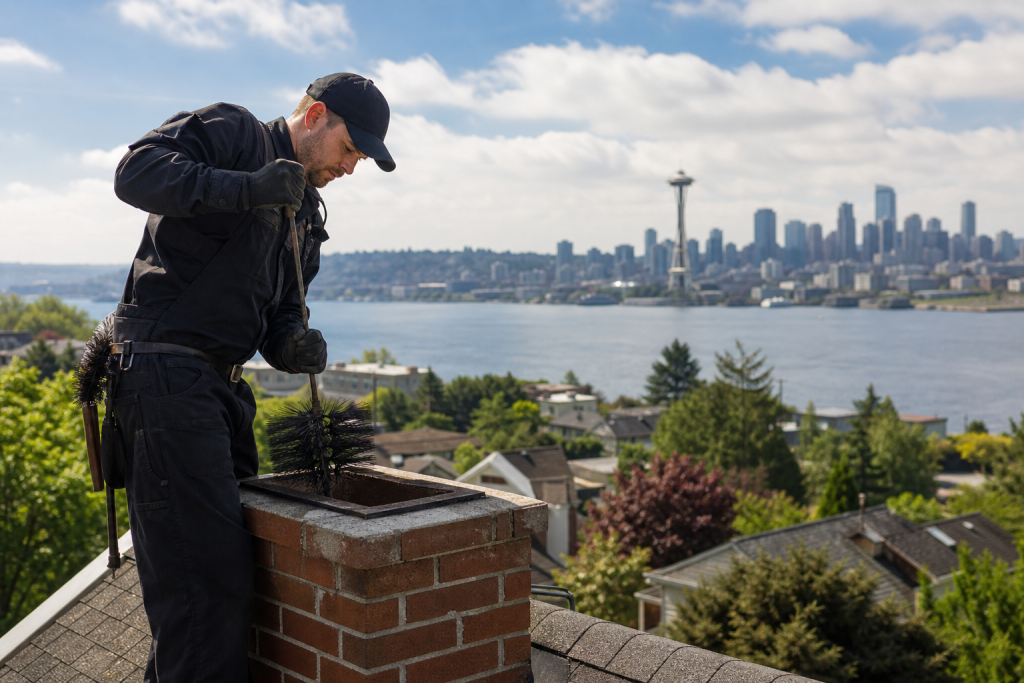
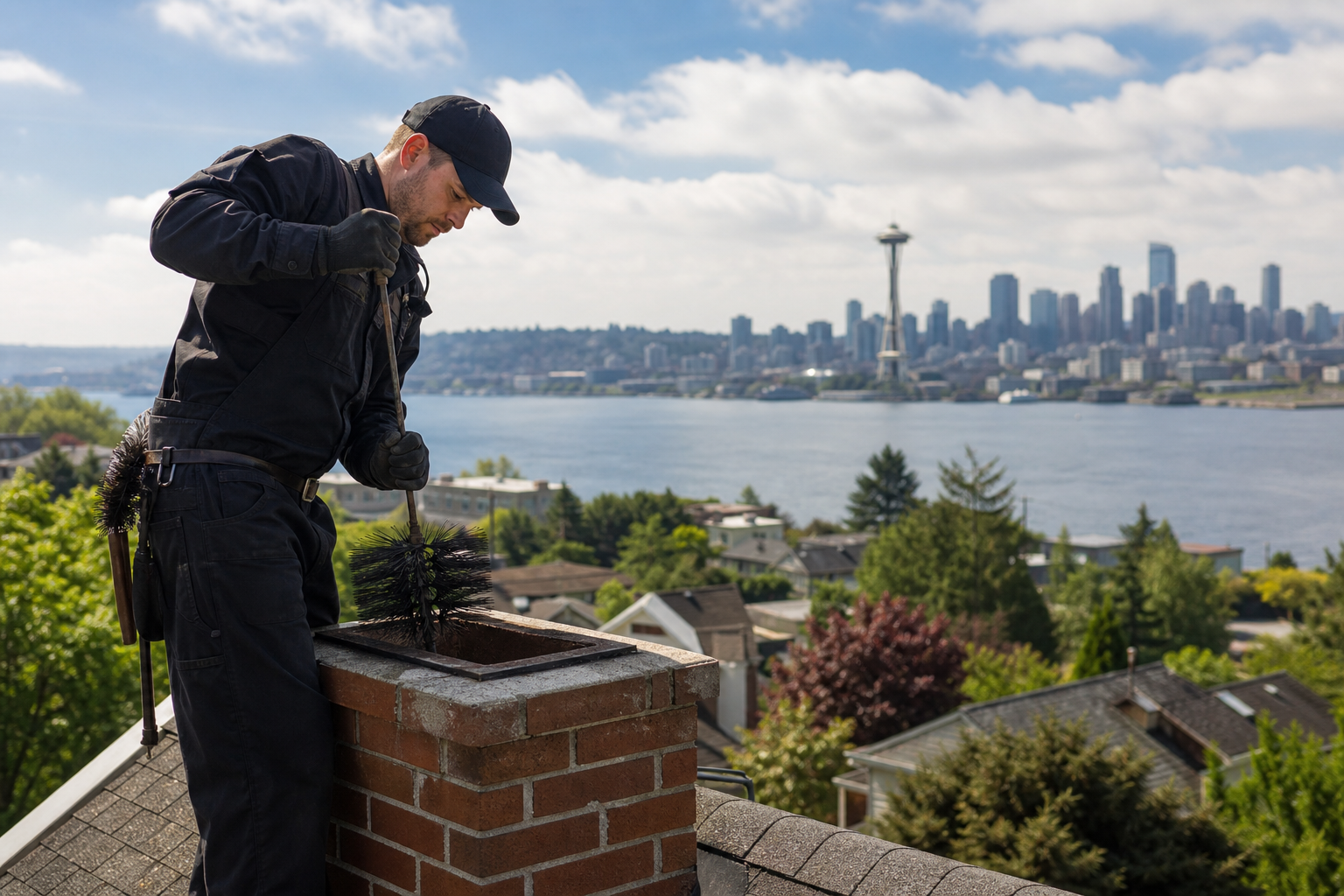
How to Choose the Right Chimney Cleaning Company in Seattle
Choosing the right chimney cleaning company in Seattle means finding a specialist who sweeps chimneys full-time, not a general contractor fitting you between roofing jobs. Look for CSIA-certified technicians, review volumes above 500 with consistent 4+ star ratings over multiple years, and a documented inspection process that includes interior flue video, damper function check, and written condition report. In Seattle’s wet climate, where marine moisture accelerates creosote buildup and masonry deterioration, this level of diligence isn’t optional—it’s what keeps your fireplace safe through a six-month burning season.
If you’d rather skip the vetting process and talk directly with a chimney-only specialist, call Horizon Chimney Sweep Washington at (866) 541-8697 for a free estimate.
Why Chimney-Exclusive Specialization Actually Matters
There are two types of chimney companies in Seattle: ones that only do chimneys, and ones that do chimneys when their schedule allows. After sweeping thousands of flues across the city, we can tell you the difference shows up in the work.
A general handyman or multi-trade contractor might clean your chimney adequately. But chimneys are systems with their own physics: draft dynamics, flue gas chemistry, clearance-to-combustible rules, and regional weather patterns that affect everything from creosote formation to crown cracking. Someone who splits attention across gutters, decks, and bathroom remodels simply hasn’t logged the hours to recognize the subtle warning signs—like the particular spalling pattern on a Seattle chimney crown that indicates freeze-thaw damage from our wet winters, or the way Puget Sound’s persistent moisture can accelerate stainless steel liner corrosion in gas installations.
Here’s what to ask to confirm actual specialization:
- “What percentage of your annual jobs are chimney-specific?” — Look for 80% or higher. Anything below 50% means you’re dealing with a generalist.
- “Do you subcontract chimney work?” — If they do, you’re not getting the expertise you called for.
- “What’s the last chimney code change you had to adapt to?” — A specialist answers immediately; a generalist deflects.
- “Can you handle a full liner replacement if you find damage?” — If they can’t, they’ll either miss problems or refer you elsewhere after you’ve paid for a diagnostic.
At Horizon Chimney Sweep Washington home, chimneys are the entire business. James Wilson has spent 17 years exclusively in this trade—no roofing, no HVAC, no handyman side work. That focus means pattern recognition you can’t fake. We’ve seen the same moisture-driven deterioration in Ballard brickwork, the same creosote glazing from unseasoned fir in West Seattle, enough times to diagnose fast and fix right the first time.
How to Read Reviews Like a Technician, Not a Shopper
Most Seattle homeowners scan star averages and call it research. But for chimney services, review content matters more than the number. Here’s what separates genuine expertise signals from basic service mentions:
Phrases that indicate real technical depth:
- “Found a cracked flue tile I didn’t know about”
- “Showed me video of the interior”
- “Explained why my draft was poor”
- “Caught a clearance issue the home inspector missed”
- “Repaired the crown with proper materials, not caulk”
Red-flag phrases suggesting superficial work:
- “Came and swept, was quick”
- “Good price, no complaints”
- “Friendly guy, did the job”
- No mention of inspection, documentation, or findings
Volume over time is the more reliable trust signal than a perfect 5.0. A company with 1,006 reviews averaging 4.8 stars across 17 years—like our record at Horizon—demonstrates sustained performance at real scale. That’s not a lucky streak or a handful of curated testimonials. That’s thousands of Seattle homeowners returning annually, referring neighbors, leaving detailed feedback about specific technical work. A 5.0 with 23 reviews often means they’re new, selectively soliciting feedback, or worse, filtering negative comments.
Look for reviews that mention specific Seattle neighborhoods too. “Cleaned our chimney in Ravenna” or “repaired crown in Columbia City” shows local routing depth and repeat customer density—signs of a company that’s embedded in the community, not a fly-by-night operation running Google ads from out of state.
CSIA Certification: What It Actually Means (And What It Doesn’t)
The Chimney Safety Institute of America (CSIA) certification is the industry standard. But there’s a critical distinction most Seattle homeowners miss: individual technician certification versus company marketing that mentions “CSIA.”
Any company can put “CSIA” on their website if they’ve sent one employee through training, or if they once held a certification that’s since lapsed. What you want is a currently certified sweep performing your work, with a credential number you can verify. Ask: “Is the technician who will be at my house personally CSIA-certified, and can I see the current credential?”
CSIA-certified sweeps are trained to NFPA 211 standards for inspection levels, understand the difference between Level I (visual), Level II (video scan, required for real estate transactions), and Level III (destructive investigation), and can identify creosote stages and appropriate removal methods. In Seattle’s heavy burning season—often October through April, when temperatures hover in the 40s and 50s—this knowledge directly affects whether your chimney is actually safe or just superficially clean.
James Wilson maintains active CSIA certification and performs continuing education annually. When he arrives at your Seattle home, you’re getting that certified expertise directly—not a subcontractor with a weekend training certificate.
What a Proper First Appointment Should Include
A thorough chimney cleaning and inspection in Seattle should take 60–90 minutes for a standard fireplace. Anything significantly shorter suggests corner-cutting. Here’s the baseline scope:
- Exterior assessment: Crown condition, cap presence and integrity, brick/stone deterioration, flashing gaps. In Seattle’s rain-heavy climate, water intrusion is the primary enemy—this step is non-negotiable.
- Interior flue inspection: Video scan preferred, especially for pre-1980s masonry. You should see the footage. We document every Seattle job with interior flue video—homeowners are often surprised by what we find above the smoke chamber.
- Firebox and damper check: Cracked firebrick, damaged throat dampers, missing or deteriorated gaskets on top-sealing dampers.
- Smoke chamber and shelf inspection: Often overlooked by quick services, but critical for proper draft and creosote accumulation.
- Written condition report: Not a verbal “looks fine” as they’re packing up. Documented findings with photos, recommended timeline for next service, and priority-ranked repair needs if any.
- Cleanup protection: Drop cloths, HEPA vacuum, shoe covers. Your living room shouldn’t look like a construction zone after a sweep.
We pulled a job last month in Greenwood where the previous “sweep” had spent 25 minutes, left a dust trail through the house, and never identified a deteriorating clay flue liner that was spalling into the flue path—a genuine carbon monoxide and fire hazard. The homeowner found us through a neighbor’s referral, and our video inspection revealed damage that required a chimney repair with HeatShield cerfractory sealant to restore safe clearances without full rebuild cost.
If your appointment lacks video documentation, written findings, or a detailed exterior assessment in Seattle’s moisture-heavy environment, you’re not getting a professional standard—you’re getting a brush rental with a truck.
Material Quality: Why Brand Names Matter in Chimney Work
When repairs are needed, the materials used determine whether you’re fixing the problem for 15 years or patching it for two. Generic or off-brand materials fail faster, especially in Seattle’s wet-dry cycling that stresses masonry and metal components.
Ask prospective companies specifically what brands they install. Vague answers like “industry standard” or “professional grade” mean they don’t know or don’t want to tell you. Reputable chimney specialists work with documented, warrantied products:
- DuraFlex and Olympia Chimney for stainless steel liner installations and relining—critical when original clay liners crack or deteriorate
- HeatShield for cerfractory flue resurfacing, a cost-effective alternative to full liner replacement when clearance issues are localized
- Famco and Copperfield for caps, dampers, and ventilation hardware that withstands Pacific Northwest corrosion
- Gelco for stainless and copper cap assemblies with proper mesh sizing for our local bird and debris profiles
We specify these brands on every Seattle estimate because we’ve tested alternatives that failed prematurely. A cap from a hardware store might last three Seattle winters; a properly specified Copperfield or Gelco assembly lasts decades. That difference matters when you’re paying for installation labor regardless.
When to Call a Pro Instead of Researching Further
Here’s the honest threshold: if you haven’t had your chimney inspected in over 12 months, if you smell smoke in your house during fires, if your damper sticks or won’t fully open, or if you see white efflorescence staining on your exterior brick—stop comparing and schedule an inspection. These aren’t maintenance preferences; they’re active safety indicators. Creosote buildup doesn’t announce itself dramatically until it’s a chimney fire.
In our 17 years across Seattle, the most expensive repairs we’ve done were on systems that went uninspected for five-plus years. Annual inspection cost is negligible against rebuild pricing.
Related services in Seattle: If your inspection reveals needs beyond cleaning, fireplace services and chimney cleaning & sweep in Dishman and surrounding Seattle neighborhoods are available through our full-service operation.
The Bottom Line
Choosing right comes down to four signals: chimney-only focus with years of volume, individual technician certification you can verify, review content that demonstrates technical depth, and a first appointment scope that includes video inspection and written documentation. Miss any of these, and you’re gambling with a system that vents toxic gases through the center of your home.
Horizon Chimney Sweep Washington has completed thousands of Seattle-area jobs with James Wilson at the door as lead technician. Our 1,006 verified reviews reflect that sustained, repeated trust—not a marketing campaign. If you’re evaluating options and want a direct conversation about your chimney’s condition, call (866) 541-8697 for a free estimate. We’ll show you exactly what we find, explain what it means, and let you decide on your timeline.
Frequently Asked Questions
Chimney cleaning in Seattle typically runs $180–$320 for a standard wood-burning fireplace inspection and sweep, with Level II video inspections adding $100–$180 depending on roof access and flue complexity. Gas fireplace inspections usually start lower, around $140–$220, but vary if venting issues require diagnostic work. Prices below $150 often indicate rushed scope or uninsured operators. Call (866) 541-8697 for an exact quote—estimates are free.
Repair is usually 40–60% less expensive than full replacement when damage is localized. HeatShield cerfractory resurfacing can restore clay flue integrity for $800–$1,800 versus $2,500–$5,000+ for a full stainless steel liner installation with DuraFlex or Olympia Chimney materials. However, if the liner has multiple cracks, missing sections, or improper sizing for your appliance, replacement is the only safe option. We assess this with interior video during every Seattle inspection. Call (866) 541-8697 to schedule.
The National Fire Protection Association recommends annual inspection for all chimneys, with cleaning frequency determined by use and fuel type. In Seattle, where many homeowners burn fir and other softwoods with higher creosote potential, active wood-burning fireplaces often need annual sweeping. Gas systems typically require inspection every 1–2 years depending on venting configuration. Our wet climate also accelerates exterior deterioration, making that annual exterior assessment equally important. Call (866) 541-8697 to set up a recurring schedule.
You can perform basic firebox cleaning and ash removal, but professional flue sweeping requires proper brushes, rods, HEPA containment, and—critically—the ability to assess what you’re seeing. Creosote stages range from soot (easily brushed) to glazed creosote (requires chemical treatment and specialized equipment) to third-stage tar deposits that are themselves a fuel source. Without training, you won’t distinguish these or recognize flue damage, improper clearances, or draft issues. In Seattle’s moisture environment, we’ve also found significant exterior deterioration that interior-only DIY work completely misses. For safety verification and documented condition, professional inspection is the wiser investment. Call (866) 541-8697 for a free estimate.
Written by James Wilson, Owner & Lead Technician at Horizon Chimney Sweep Washington, serving Seattle since 2009.
Need Chimney Cleaning Help?
Call Horizon Chimney Sweep Washington — licensed & insured, here with fast after-hours help in Washington.
(866) 541-8697