
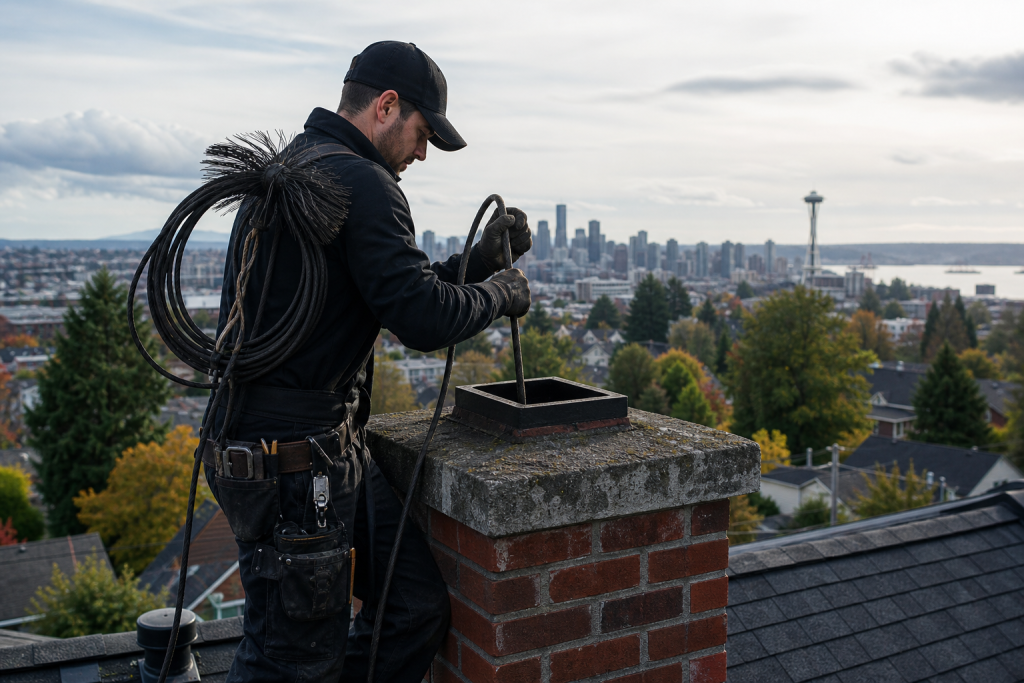
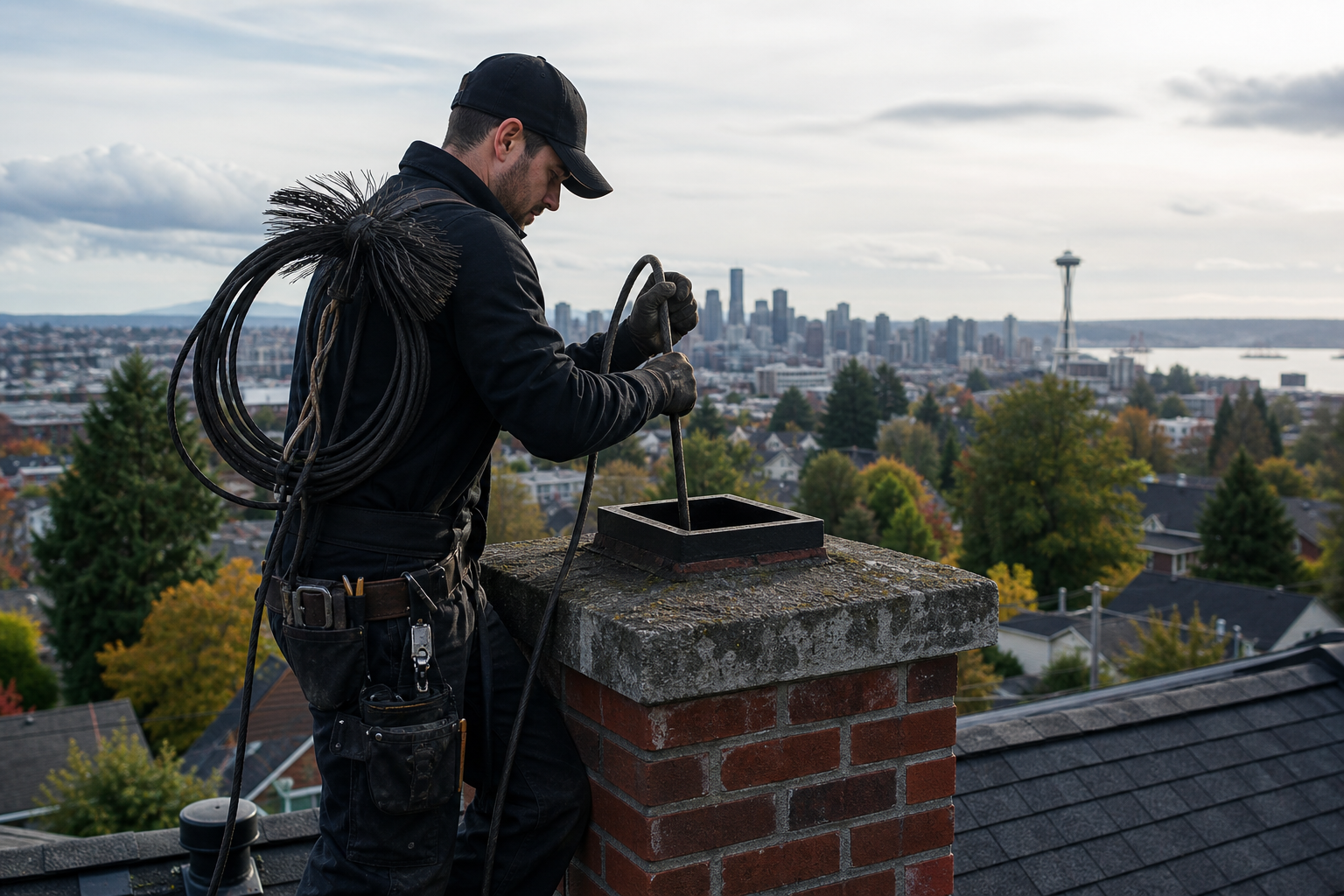
Emergency Chimney Cleaning & Sweep Near Me: What Seattle Homeowners Should Do First
If you smell burning from your chimney but don’t have a fire going, stop reading and call 911 first. Chimney fires can smolder inside a wall for hours before they break through. Once that’s handled, here’s what Seattle homeowners should do in the first 30 minutes: shut down the fireplace completely, ventilate the space without opening the flue wider, and gather details about what you saw, heard, and smelled before the incident. If you’d rather not navigate this alone, call Horizon Chimney Sweep Washington at (866) (541) 869-8697 — we’ll walk you through immediate steps and dispatch if needed.
We’ve been inside thousands of Seattle chimneys over 17 years, and the emergencies that cost homeowners the most are rarely the ones that started big. They’re the ones where someone waited, or guessed, or tried to “just get through the season.” Here’s what we’ve learned about the real first steps.
Recognizing the Three Chimney Emergencies Seattle Homeowners Actually Face
Not every chimney problem is an emergency, and not every company using the word “emergency” in their Google ad is equipped to respond like one. In our experience across Seattle — from Capitol Hill’s 1920s masonry to newer builds in Ballard and West Seattle — these three scenarios demand immediate, specific action.
1. Active Flue Fire
You’ll hear a roaring or freight-train sound from the chimney. You may see flames or dense smoke at the top, or smell intense, acrid burning. The fire is inside the flue, consuming built-up creosote.
What to do first:
- Call 911 before anything else
- Do not attempt to extinguish with water — thermal shock can crack flue tiles
- Close the fireplace glass doors if you have them; otherwise close any damper or air intake to starve oxygen
- Evacuate if smoke enters living spaces
- Do not use the fireplace again until a certified sweep inspects with a camera
We’ve seen flue fires in Seattle homes where the homeowner didn’t realize it had happened — the fire burned out, they assumed “no harm done,” and six months later we found cracked terra cotta flue tiles and heat-compromised mortar. That hidden damage is what makes the next fire catastrophic.
2. Smoke Back-Drafting Into Living Space
Smoke pouring into the room during normal use, or persistent smoky odor hours after the fire is out. This is often a blocked flue, failed damper, or negative air pressure issue — common in Seattle’s tighter modern homes and during our windier winter storms.
What to do first:
- Extinguish the fire safely if it’s still burning
- Open windows on the same level to equalize pressure
- Close interior doors to contain smoke migration
- Do not run exhaust fans or your HVAC — this worsens negative pressure
Last winter we responded to a back-draft call in Queen Anne where the homeowner had been running their kitchen range hood and bathroom fan simultaneously with the fireplace. The house was so tight that the chimney became the path of least resistance for makeup air. Simple fix once diagnosed, but miserable until then.
3. Storm Damage to Crown or Cap
After Seattle’s wind and rain events — particularly the November storms that track across Puget Sound — we see displaced caps, cracked crowns, and damaged flashing. Water entry is the enemy here, and it works fast.
What to do first:
- Photograph all visible damage from ground level — do not climb onto a wet roof
- Place a tarp over the fireplace opening if water is entering the firebox
- Document the date and weather conditions
- Call for inspection within 24–48 hours even if the damage looks minor
Water that gets past a compromised crown doesn’t just damage the firebox. It saturates the smoke chamber, rusts the damper, and can destroy a stainless steel liner from the outside in. We’ve replaced DuraFlex liners in Seattle homes where the root cause was a $200 cap that went missing in a storm two years prior.
How to Safely Close Off Your Fireplace While Waiting for Help
This is the step most homeowners get wrong. They open windows wide, or they close the damper and hope for the best, or they douse a smoldering fire with water and crack the firebox.
Here’s the sequence we recommend:
- Extinguish remaining fuel safely: Use a dry chemical fire extinguisher if flames are present. For embers, spread them out with a poker and let them die naturally — do not add water to hot masonry.
- Close the damper if it’s accessible and safe to do so: This prevents smoke from dropping back into the room. If the damper is stuck or damaged, leave it alone.
- Seal the opening: If you have tight-fitting glass doors, close them. If not, tape heavy cardboard or a wool blanket across the opening — not plastic, which melts and off-gasses.
- Isolate the room: Close doors to prevent smoke migration to bedrooms. If you have a return air vent in the fireplace room, cover it temporarily.
- Monitor: Check the chimney exterior for visible smoke or flame. If either appears, evacuate and call 911 again.
In our 17 years, the homeowners who minimize damage are the ones who stay calm and follow this sequence. The ones who panic and throw water on a chimney fire, or who open the flue wider to “let smoke out,” are the ones calling us for rebuilds instead of repairs.
What to Tell a Sweep When You Call for Emergency Service
The words “emergency chimney sweep” get thrown around in Google ads, but a true emergency response requires the right equipment and the right technician. When you call, the details you provide determine what we bring — and whether we’re the right fit for your situation.
Tell us:
- What you saw, heard, or smelled — and when it started
- Whether 911 was called or fire department responded
- Your chimney type: masonry or factory-built (metal)
- Fuel type: wood, gas, pellet, or oil
- When it was last swept or inspected, if you know
- Whether you can see visible damage from the ground
- Whether the fireplace is currently in use or has been used in the last 24 hours
This information lets us bring the right camera equipment, the proper brush sizes, and — if needed — materials for temporary weatherproofing. It also tells us whether James Wilson needs to come personally or whether our schedule allows for same-day dispatch.
When to call a pro: If you’ve had a flue fire, back-draft event, or visible storm damage, you need inspection before next use — full stop. No exceptions. The risks of hidden damage outweigh any savings from waiting.
Related services in Seattle: For routine maintenance before emergencies strike, see our Chimney Cleaning & Sweep in Dishman page. If inspection reveals damage from an event, our Chimney Repair in Dishman team handles everything from crown rebuilds to full masonry restoration.
How to Spot a Real Emergency Service vs. a Marketing Word
Seattle’s market has no shortage of companies promising “24/7 emergency service” who are actually general handymen with a brush and a cell phone. Here’s how to tell the difference before you’re standing in a smoke-filled living room:
| Real Emergency Response | Marketing-Only “Emergency” |
|---|---|
| Asks detailed diagnostic questions before quoting | Quotes a flat rate without hearing your situation |
| Has chimney-specific camera and sweep equipment on the truck | Shows up with a shop vac and a flashlight |
| Can explain what they’ll inspect and how | Vague about scope of work |
| Provides written findings with photos | Verbal-only assessment |
| References specific brands and materials (Olympia Chimney, Famco, Copperfield) for any needed repairs | Generic “we’ll fix it” language |
True emergency availability means the person who answers the phone understands chimney systems — not just dispatch software. At Horizon Chimney Sweep Washington, James Wilson still takes many emergency calls directly. When you’ve seen 17 years of flue fires and freeze-thaw damage, you can triage over the phone in 90 seconds.
We’ve also seen the after-hours premium game: companies that charge 2x after 6 PM for “emergency” calls that are actually just inconvenient scheduling. A real emergency is a safety threat, not a timing preference. We don’t penalize Seattle homeowners for when their chimney fails.
Documenting Damage for Insurance: What to Photograph Before the Sweep Begins
Once the immediate danger passes, your next audience is your insurance adjuster. Sweeps are thorough — we move debris, clean surfaces, and sometimes remove damaged components. If you need that damage documented for a claim, photograph it before we start work.
Capture these images:
- Wide shot of the fireplace and surrounding wall/ceiling for smoke staining
- Close-up of the firebox interior, including any cracked brick or damaged refractory panels
- Exterior chimney from ground level: cap, crown, flashing, visible mortar joints
- Any water staining or debris in the firebox
- Date-stamped photo of weather conditions if storm-related
- Your most recent sweep/inspection receipt, if available
We provide written inspection reports with photos for all post-emergency calls, but our documentation serves safety and repair planning first. Your photos serve your claim. Take five minutes before we arrive — it can save weeks of back-and-forth with adjusters.
In Seattle’s older neighborhoods — think Wallingford, Green Lake, the pre-war stock in the Central District — we’ve documented damage that revealed pre-existing maintenance gaps. Insurance covers sudden events, not gradual neglect. Clear photos with timestamps help establish which is which.
The Bottom Line
Chimney emergencies in Seattle follow patterns we’ve seen for 17 years, but they never feel routine when they’re your home. The first 30 minutes matter: call 911 for active fires, shut down and seal the fireplace for back-drafts, and document before anyone starts work. After that, get a chimney-specific professional with the equipment to see what you can’t.
Horizon Chimney Sweep Washington has handled emergency calls across Seattle since 2009. James Wilson still leads the technical work, and our 1,006 verified reviews reflect how we treat homeowners after the crisis passes — with clear findings, durable repairs using brands like DuraFlex and Olympia Chimney, and no pressure to buy what you don’t need. If you’re dealing with a chimney emergency or want to prevent one, call (866) 541-8697 for a free estimate.
Frequently Asked Questions
Emergency chimney inspections and sweeps in Seattle typically range from $250–$450 depending on accessibility, chimney height, and whether camera inspection is needed. True emergency calls that require after-hours response may carry additional trip charges, but beware companies that inflate rates simply for using the word “emergency.” Call (866) 541-8697 for an exact quote — estimates are free.
No. Even a “small” flue fire that self-extinguished can crack flue tiles, compromise mortar joints, and damage the chimney liner — damage that’s invisible without a camera inspection. We’ve found hairline cracks in Seattle chimneys where the homeowner assumed “no harm done” because the fire burned out. Those cracks become the path for the next fire to reach your framing. Schedule inspection before next use.
Ask what specific equipment they bring for emergency calls, whether the technician who arrives is chimney-certified (not a general handyman), and whether they provide written findings with photos. A real emergency service triages over the phone and brings camera gear, proper brushes, and temporary weatherproofing materials. If they can’t name their inspection process or the brands they install for repairs, they’re likely using “emergency” as a pricing strategy.
For caps and minor crown cracks, repair is almost always more economical — a new Famco or Copperfield cap runs $200–$400 installed versus thousands for water damage remediation if you wait. For extensive crown failure or compromised flue liners, replacement prevents repeated repair costs. We evaluate based on what we find with our camera, not a one-size-fits-all recommendation. Call (866) 541-8697 for an inspection and honest assessment of repair versus replace.
Written by James Wilson, Owner & Lead Technician at Horizon Chimney Sweep Washington, serving Seattle since 2009.
Need Chimney Cleaning Help?
Call Horizon Chimney Sweep Washington — licensed & insured, here with fast after-hours help in Washington.
(866) 541-8697