
Last updated July 11, 2026
The Complete Guide to Chimney Cleaning in Seattle
Most chimney fires in the Pacific Northwest aren’t caused by dirty chimneys — they’re caused by chimneys that were cleaned using the wrong method for glazed, moisture-saturated creosote. There’s a difference, and it matters. After 17 years sweeping chimneys from Ballard to Beacon Hill, we’ve pulled apart flues that looked “clean” to the naked eye but harbored glass-hard creosote deposits ready to ignite at 451°F. In this guide, you’ll learn why Seattle’s marine climate demands a fundamentally different approach to chimney maintenance than the dry-climate advice dominating online, how to spot a legitimate sweep from a handyman with a brush kit, and exactly what your chimney needs after our long, damp burn seasons.
Quick Answer
Professional chimney cleaning in Seattle typically costs $200–$350 for a standard wood-burning fireplace and should include a Level 1 or 2 inspection, rotary power sweeping for glazed creosote, and a written condition report. Because Seattle’s cool, damp winters accelerate Stage 2 and Stage 3 creosote formation, most wood-burning households here need annual sweeping — even with moderate use — rather than the biennial schedule often suggested for drier climates.
Table of Contents
- Why Seattle’s Climate Changes Everything About Creosote
- Level 1, 2, and 3 Inspections: What Seattle Homeowners Actually Need
- The Hidden Danger of Low-Heat Fires in Mild Seattle Winters
- What a Legitimate Sweep Does That a Handyman Cannot
- How to Read a Sweep’s Report and Spot Real vs. Fake Repairs
- Chimney Cleaning Costs in Seattle: What to Expect
- Common Mistakes to Avoid
- When to Call a Professional
- Frequently Asked Questions
Why Seattle’s Climate Changes Everything About Creosote
Seattle sits in a marine west coast climate zone where average winter humidity hovers near 80% and temperatures rarely plunge enough to sustain roaring, high-temperature fires. This isn’t a footnote — it’s the central fact that determines how creosote behaves inside your flue.
Here’s what happens: when you burn wood in a cool, damp environment, the fire struggles to reach the 1,100°F+ temperatures needed for complete combustion. Incomplete combustion produces more smoke, and that smoke carries unburned hydrocarbons that condense on flue walls as creosote. In Seattle’s climate, this creosote doesn’t form the dry, flaky Stage 1 deposit that brushes off easily. Instead, it rapidly hardens into Stage 2 (spongy, tar-like) or Stage 3 (glazed, glass-hard) creosote — the kind that requires rotary power equipment and specialized solvents to remove safely.
We’ve seen this pattern repeatedly in neighborhoods like Wallingford and Wedgwood, where homeowners burn responsibly but still develop hazardous glazing within a single season. The 2022-2023 winter was particularly brutal: an extended cold snap with persistent atmospheric river moisture created perfect conditions for rapid creosote accumulation. We removed glazed deposits from chimneys that had been “swept” by generalists just months earlier using only hand brushes — tools fundamentally inadequate for Seattle’s creosote profile.
Key distinction for Seattle homeowners: Dry-climate guides often recommend sweeping every 50 fires or two years. In our market, that advice is potentially dangerous. The Chimney Safety Institute of America’s general guidance assumes average combustion conditions. Seattle’s conditions are not average.
Level 1, 2, and 3 Inspections: What Seattle Homeowners Actually Need
The National Fire Protection Association defines three inspection levels, and understanding the difference protects you from both under-service and unnecessary upsells.
Level 1 Inspection
This is the baseline — a visual examination of readily accessible portions of the chimney exterior, interior, and connecting appliances. No tools are used to open or dismantle anything. A Level 1 is appropriate when:
- Your appliance and venting system haven’t changed
- You’re continuing with the same fuel type
- You had a professional sweep within the past year with no concerns raised
For many Seattle homeowners with gas inserts and no performance issues, an annual Level 1 paired with cleaning is sufficient.
Level 2 Inspection
This is where Seattle’s wet climate makes its demands known. A Level 2 includes everything in Level 1 plus video camera inspection of internal surfaces, accessible attics, crawl spaces, and basements. It’s required when:
- You’re buying or selling a home (non-negotiable in our market — we’ve found critical defects in 30%+ of pre-purchase inspections)
- You’ve experienced a chimney fire, however minor
- You’ve had weather damage, seismic event, or structural modification
- You’re changing fuel types or appliance
- It’s been more than 12 months since your last professional evaluation, especially after a damp Seattle winter
The camera inspection is the critical differentiator. We’ve identified cracked flue tiles behind seemingly intact mortar in Ravenna homes, and water-damaged liner sections in Capitol Hill chimneys that appeared fine from the firebox. Without camera verification, these defects remain hidden until they cause carbon monoxide intrusion or structural damage.
Level 3 Inspection
This involves dismantling components to access concealed areas — removing chimney crowns, interior walls, or surrounds. It’s only warranted when Level 1 or 2 inspection reveals a hazard that cannot be fully evaluated otherwise. If a sweep recommends Level 3, request to see the specific finding that justifies it. Legitimate triggers include suspected hidden fire damage or structural compromise requiring direct examination.
Our recommendation for Seattle: After any winter with significant rainfall and freeze-thaw cycles (most winters here), budget for at least a Level 2 inspection every 2-3 years even with annual cleaning. The moisture penetration and thermal stress our chimneys endure justifies the deeper look.
The Hidden Danger of Low-Heat Fires in Mild Seattle Winters
Counterintuitive but critical: the smoldering “aesthetic” fire common in Seattle’s 40-50°F winter evenings produces more creosote than a roaring blaze.
Here’s the physics. Complete wood combustion requires three things: adequate heat, sufficient oxygen, and time. When you damp down a fire for a long, lazy burn — common when outdoor temperatures don’t demand serious heat output — you starve it of oxygen and lower combustion temperature. The result is massive creosote production per log burned. We’ve measured flue deposits in Queen Anne homes where owners burned “only on weekends” with restricted airflow that exceeded annual accumulation from daily high-temperature burns.
The “shoulder season” fires — October, November, March, April — are particularly problematic. Outdoor temperatures in the 50s mean short, low-intensity burns that never establish the sustained high temperatures needed to volatilize creosote deposits. Instead, layer upon layer of wet, unburned residue coats the flue, creating the glazed deposits that dominate our Seattle service calls.
What to do instead:
- Build smaller, hotter fires rather than large, damped-down ones
- Use a thermometer or stovetop monitor to maintain 400-600°F flue temperature
- Never burn unseasoned wood — in Seattle’s humidity, “seasoned” means 18+ months under cover, not 6 months stacked in rain
- Let the fire burn out completely rather than choking it overnight
In our experience across Magnolia, Fremont, and the Central District, homeowners who switch to hot, brief fires and proper wood seasoning reduce their creosote accumulation by 60% or more — regardless of total burn hours.
What a Legitimate Sweep Does That a Handyman Cannot
The chimney sweep trade in Seattle has a segmentation problem. Platform-based service marketplaces and general handymen offer “chimney cleaning” at prices that seem attractive until you understand what’s actually being delivered — or not delivered.
A legitimate, chimney-specialist sweep brings equipment and protocols that generalists simply don’t possess:
- Rotary power sweeping systems: We use high-torque drill-driven whips with customized poly or metal heads sized to your exact flue dimension. For Seattle’s glazed creosote, hand brushes are cosmetic tools — they skim surface debris while leaving the hazardous glass-hard layers intact. Our rotary systems generate the mechanical action needed to fracture and extract Stage 3 deposits without damaging flue tiles.
- Video inspection capability: A self-leveling, high-resolution camera on a flexible rod, with monitor display for homeowner viewing. We document every inspection with timestamped footage. If a sweep claims to have “inspected” your chimney but can’t show you video evidence, they didn’t inspect it — they glanced at it.
- Flue dimension verification: Proper liner and cap sizing requires precise measurement. We measure internal flue dimensions at multiple points (they often vary in older Seattle construction) to ensure any recommendations fit correctly. An oversized cap in our wind-driven rain climate channels water directly into the flue; an undersized liner creates drafting problems that accelerate creosote formation.
- Combustible clearance assessment: Using mirrors, lights, and measurement tools to verify proper clearances between chimney components and surrounding framing. This is where Seattle’s older housing stock — Ballard bungalows, Capitol Hill craftsmans, pre-war brick in the International District — reveals hidden dangers that visual inspection misses.
- Specialized repair materials: When we identify liner damage or crown deterioration, we specify and install industry-standard products — DuraFlex stainless liners for relining, HeatShield cerfractory sealant for resurfacing damaged flue tiles, Famco and Copperfield components for caps and dampers. These aren’t premium upgrades; they’re the baseline for repairs that survive Seattle’s wet-dry cycles.
The handyman with a $50 brush kit from a hardware store cannot perform these functions. We’ve been called to dozens of Seattle homes where a “sweep” left the chimney looking clean while missing cracked crowns, deteriorated mortar joints, or improper clearances that represented genuine fire hazards.
How to Read a Sweep’s Report and Spot Real vs. Fake Repairs
After 17 years and over 1,000 verified reviews, we’ve earned the credibility to say this plainly: some operators in this market use inspection reports as sales documents, not technical assessments. Here’s how to tell the difference.
A legitimate report includes:
- Specific measurements (flue dimensions, crack widths in 32nds of an inch, clearance distances in inches)
- Photographic or video documentation with timestamps
- NFPA or IRC code references for any cited deficiencies
- Prioritization of findings (immediate safety hazard vs. monitor vs. preventive maintenance)
- Clear distinction between what was observed and what is recommended
Red flags that suggest upselling:
- Vague language like “chimney needs work” without specific defects identified
- Pressure for same-day decision-making (“I can do it right now for a discount”)
- Recommendations for complete liner replacement when video shows isolated tile cracks — HeatShield cerfractory resurfacing often addresses these at fraction of replacement cost
- Claims of “code violations” without citing specific code sections
- Refusal to provide the report in writing or allow time for second opinion
Seattle-specific context: Our city’s combination of seismic risk (we’re in a high seismic zone), prolonged moisture exposure, and older housing stock means some deterioration is normal and manageable. A hairline crown crack in a 1920s brick chimney doesn’t automatically demand full rebuild — it may need monitoring, waterproofing, or targeted repair. We’ve preserved original chimney character in historic Madison Park and Montlake homes through selective intervention rather than wholesale replacement.
When we deliver reports at Horizon Chimney Sweep Washington, we categorize findings as: (1) Safety hazard — address before next use; (2) Deterioration — plan repair within 12 months; (3) Preventive — consider for long-term preservation. This framework lets Seattle homeowners make informed decisions without manufactured urgency.
Chimney Cleaning Costs in Seattle: What to Expect
Pricing transparency matters. Here’s what professional chimney cleaning costs in the Seattle market based on our 2024 service data:
| Service | Typical Range | What’s Included |
|---|---|---|
| Standard wood-burning fireplace sweep + Level 1 inspection | $200 – $280 | Rotary power sweeping, debris removal, basic condition check |
| Wood insert or stove sweep + Level 1 inspection | $240 – $320 | Disassembly/reassembly of baffle/components, rotary sweeping |
| Gas fireplace inspection and cleaning | $150 – $220 | Burner/pilot service, debris removal, safety check |
| Level 2 inspection with video | $280 – $400 | Full camera survey, attic/crawl space examination, written report |
| Heavy glazed creosote removal (Stage 3) | $350 – $550 | Chemical treatment, multiple rotary passes, extended labor |
| Chimney cap installation (standard) | $350 – $600 | Custom-fitted cap, proper flashing, water intrusion protection |
Factors that increase cost in Seattle:
- Steep roof access: Many Seattle homes in Queen Anne, Magnolia, and West Seattle have pitches exceeding 8/12, requiring specialized ladder work or scaffolding
- Historic construction: Pre-1950 chimneys often have irregular flue dimensions, non-standard components, or fragile mortar requiring extra care
- Deferred maintenance: Chimneys unswept for 3+ years in our climate typically require chemical pre-treatment and multiple service visits
- Water damage remediation: Seattle’s annual rainfall finds any crown or flashing weakness; addressing saturation damage adds scope
We provide upfront, itemized estimates before beginning work — no surprise charges for “discovered” conditions that should have been apparent at inspection. Call (866) 541-8697 for a free estimate specific to your Seattle home.
Common Mistakes to Avoid
- Assuming gas fireplaces don’t need service. Seattle’s moisture-laden air corrodes gas burner orifices and deteriorates ceramic logs. Annual inspection prevents delayed ignition, sooting, and carbon monoxide risks — even with “clean” gas.
- Burning construction debris or painted wood. The chemicals released create toxic deposits and accelerate flue deterioration. We’ve found nails, staples, and even pressure-treated fragments in West Seattle fireboxes — all serious hazards.
- Ignoring the chimney after a “mild” winter. Seattle’s 2023-2024 winter had extended 45-55°F periods with constant drizzle — ideal conditions for maximum creosote with minimum homeowner awareness. Don’t equate mild temperatures with low maintenance needs.
- Hiring based on lowest price alone. A $99 sweep that skips camera inspection, uses inadequate tools, and misses critical defects costs far more than a thorough service. We’ve rebuilt flues that failed because budget sweeps missed deterioration for years.
- DIY sweeping without understanding Seattle creosote. Homeowner brush kits cannot remove glazed deposits. Worse, improper technique can damage flue tiles or compact creosote into obstructions. For Seattle’s creosote profile, professional equipment is essential.
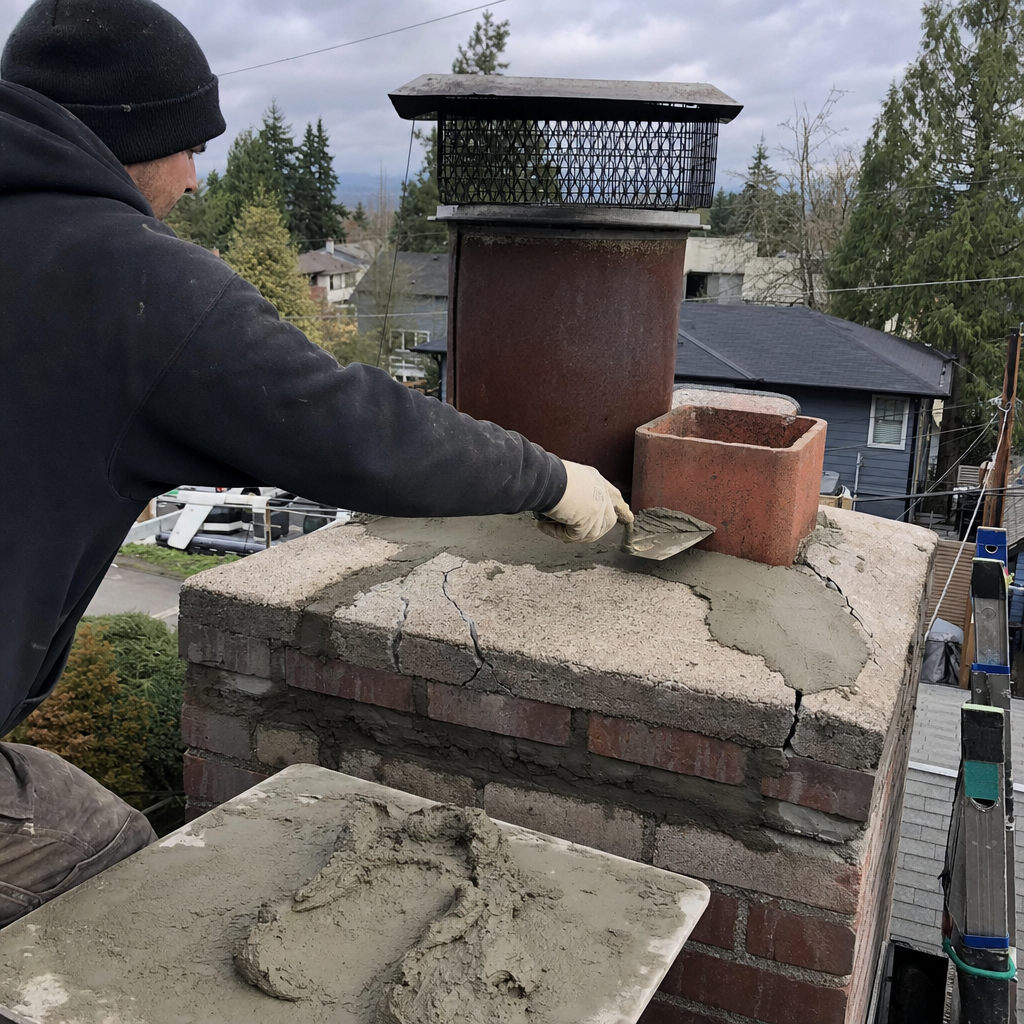
- Neglecting the crown and flashing. Water is Seattle chimneys’ primary enemy. A cracked crown or deteriorated flashing admits moisture that destroys liners, rusts dampers, and undermines structural integrity — all invisible from the firebox until damage is extensive.
- Waiting for visible smoke problems. By the time drafting issues manifest as smoke in the room, creosote obstruction or liner damage is already advanced. Preventive maintenance avoids emergency scenarios during the coldest, wettest months.
When to Call a Professional
Contact a chimney specialist promptly if you notice any of these conditions: visible creosote flakes falling into the firebox, smoke entering the room during normal operation, a strong tar-like odor even when not burning, white efflorescence or staining on exterior brick, or any performance change after seismic activity or severe weather. These symptoms indicate conditions that homeowner observation cannot fully assess.
For Seattle homeowners specifically, we recommend professional evaluation before the burn season begins — ideally September or early October — when sweep schedules open and any needed repairs can be completed before first frost. Waiting until November risks delayed service and emergency pricing.
Horizon Chimney Sweep Washington offers free estimates throughout Seattle — call (866) 541-8697 to schedule with James Wilson or our chimney-specialist team. With 17 years of Seattle-specific experience and over 1,006 verified reviews, we provide the diagnostic depth that protects your home through our demanding winters.
Frequently Asked Questions
Standard chimney cleaning in Seattle ranges from $200 to $350 for wood-burning fireplaces, with gas fireplace service typically $150 to $220. Heavy glazed creosote removal runs $350 to $550 due to specialized chemical treatment and extended labor. Call (866) 541-8697 for a free, exact quote based on your specific chimney type and condition — estimates are always free.
Most Seattle wood-burning households need annual sweeping due to our marine climate’s effect on creosote formation. The EPA’s general “every 50 fires” guidance assumes drier combustion conditions than Seattle typically provides. If you burn with restricted airflow for ambiance, or use unseasoned wood, you may need more frequent service — we’ve seen hazardous glazing develop in single seasons in damp neighborhoods like Ballard and Fremont.
Cleaning removes deposits; inspection evaluates condition. They’re related but distinct services. A sweep without inspection misses structural defects; an inspection without cleaning may obscure problems beneath creosote layers. Professional service in Seattle should include both, with video documentation for any Level 2 inspection.
We don’t recommend it for Seattle’s creosote profile. DIY brush kits handle dry, flaky Stage 1 deposits adequately but fail against the glazed Stage 2 and 3 creosote our climate produces. Additionally, without video inspection capability, you cannot assess flue tile condition, liner integrity, or clearance compliance. The safety risks of undetected defects exceed any cost savings.
For localized tile cracks and moderate deterioration, HeatShield cerfractory resurfacing typically costs 40-60% less than full stainless steel relining with DuraFlex. However, extensive cracking, missing tiles, or outdated unlined construction usually warrant complete liner replacement. We evaluate each Seattle chimney individually and present both options when both are viable — no automatic default to the most expensive solution.
That sharp, acrid odor during autumn rains indicates moisture activating creosote deposits and potentially water intrusion through crown cracks or failed flashing. It’s not just unpleasant — it signals conditions that accelerate flue deterioration and can indicate drafting problems that allow moisture to accumulate rather than vent. A Level 2 inspection with moisture source identification is the appropriate response.
The Bottom Line
Seattle’s chimney maintenance isn’t a generic procedure with a local address attached. Our marine climate creates creosote behaviors, moisture dynamics, and deterioration patterns that demand climate-calibrated expertise — the kind that comes from 17 years of hands-on work in this specific environment. Annual professional service with proper inspection, rotary power sweeping for glazed deposits, and informed evaluation of repair recommendations protects both safety and value. The homeowners we’ve served longest in Seattle aren’t those who found the cheapest initial quote; they’re the ones who recognized that genuine expertise, documented with video evidence and specific measurements, prevents the emergency calls that cost far more than preventive care.
Written by James Wilson, Owner & Lead Technician at Horizon Chimney Sweep Washington, serving Seattle since 2009.